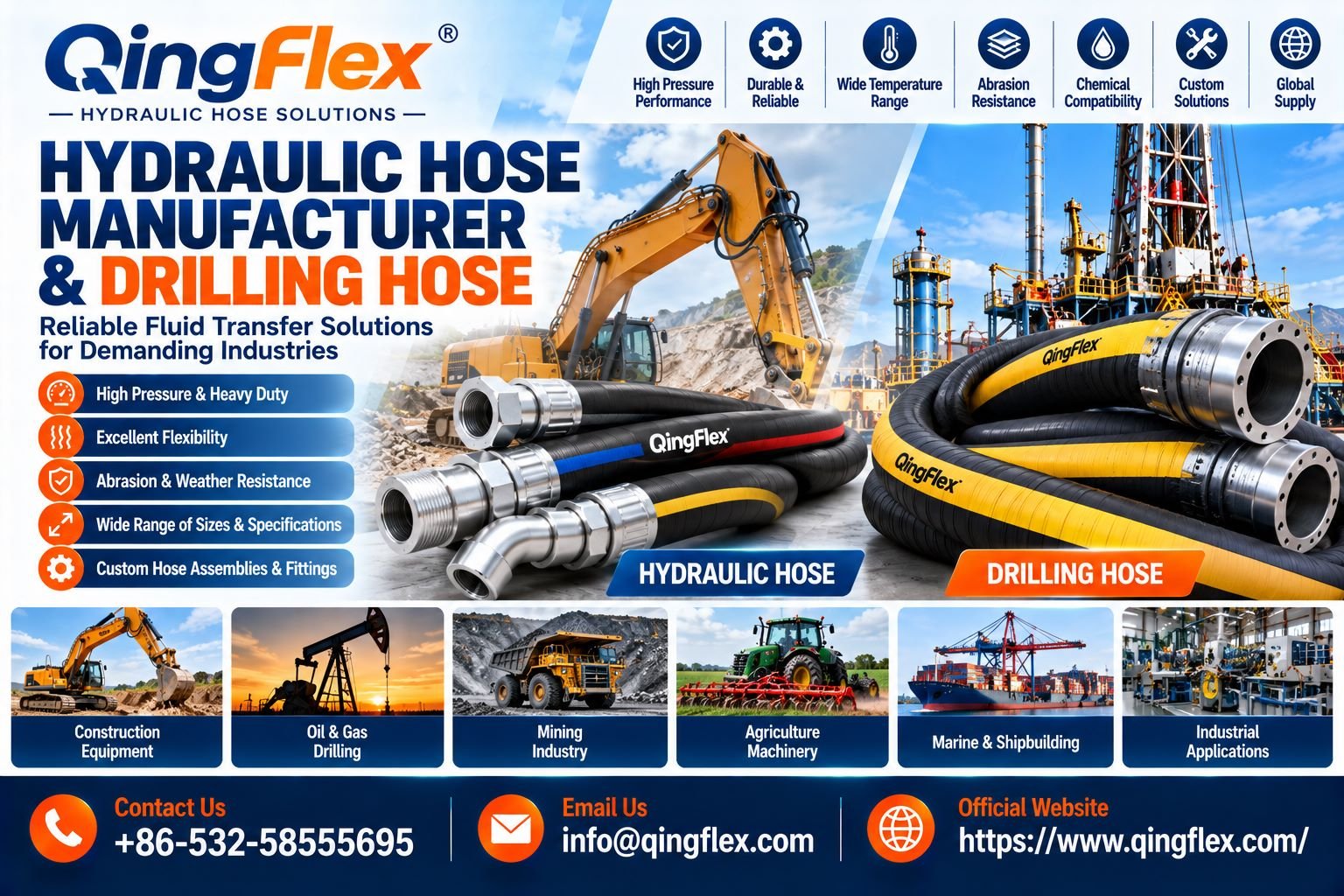
Drilling fluids may contain water, oils, polymers, weighting materials, and specialized chemical additives, creating complex conditions for fluid-transfer components.
For a Hydraulic Hose Manufacturer, understanding these characteristics is essential when developing hoses intended for demanding industrial applications.
A specialized drilling hose must be compatible with the fluid it transports while meeting the required pressure, temperature, and mechanical specifications.
Different drilling applications use different fluid formulations. A hose suitable for one system may not necessarily be appropriate for another.
This makes fluid compatibility an important engineering consideration rather than a secondary product feature.
The broader industry discussion increasingly recognizes that dependable hose performance begins with understanding what moves through the hose, not simply how much pressure it can withstand.
Why Drilling Fluids Require Special Attention
Drilling fluids perform several important functions during drilling operations. Depending on the application, they help transport cuttings, control wellbore pressure, cool equipment, and support drilling performance.
However, their composition can present challenges for flexible hose assemblies.
Certain drilling fluids contain suspended solids that contribute to abrasive wear. Others include chemical additives that require careful consideration when selecting hose materials.
Fluid properties can also change depending on operating conditions and formulation adjustments.
A drilling hose designed for these environments must therefore be evaluated against the actual fluid characteristics.
Important considerations include:
- Chemical compatibility: Hose materials must resist unacceptable deterioration from the intended fluid.
- Abrasion resistance: Suitable inner-tube construction helps manage wear from suspended particles.
- Temperature suitability: Materials must remain compatible with the expected fluid temperature.
- Pressure capability: The complete hose assembly must meet specified operating requirements.
- Material stability: Hose components must maintain suitable performance under the intended service conditions.
These requirements illustrate why drilling-fluid transfer demands application-specific engineering decisions.
The Inner Tube Becomes a Key Engineering Consideration
The inner tube is the primary hose component exposed to the transferred drilling fluid.
Its material composition influences how effectively the assembly withstands chemical exposure and abrasive conditions.
A technically capable Hydraulic Hose Manufacturer must consider the interaction between the fluid and the selected inner-tube material.
Rubber compounds and other engineered materials provide different characteristics, but no single material is universally suitable for every drilling-fluid formulation.
Chemical Resistance
The presence of incompatible additives can contribute to swelling, softening, hardening, or other unwanted changes in hose materials.
Material selection should therefore reflect the actual fluid composition rather than relying on general product descriptions.
Abrasive Wear
Drilling fluids containing suspended solids can create internal wear, particularly where fluid movement and hose geometry produce demanding flow conditions.
Appropriate hose construction and correct installation help manage these challenges.
Structural Compatibility
The inner tube must also function with the reinforcement and outer covering.
A suitable inner material alone does not guarantee that the complete hose assembly meets the application’s requirements.
As an engineering principle explains:
Fluid Velocity and Hose Diameter Influence Performance
Fluid compatibility is not limited to chemical resistance.
The physical movement of drilling fluid through a hose can also influence operating performance.
Internal diameter, fluid velocity, flow characteristics, and pressure losses are important considerations during system design.
A hose with an unsuitable internal diameter may create excessive flow resistance or fail to meet the intended system requirements.
In abrasive fluid applications, operating conditions may also contribute to internal surface wear.
Engineering teams should evaluate these factors using the equipment’s actual operating requirements.
Simply selecting a larger or higher-pressure hose does not automatically provide the most suitable solution.
Effective product selection requires balancing fluid movement, equipment compatibility, and documented hose limitations.
Preventing Contamination During Fluid Transfer
Fluid contamination is another important consideration in drilling operations.
Foreign particles, incompatible residues, or debris entering a fluid-transfer system may affect equipment performance or fluid properties.
Hose assemblies should therefore be handled and stored using appropriate contamination-control procedures.
Connection openings may require suitable protection before installation.
Where cleaning or flushing is necessary, procedures should follow manufacturer recommendations and applicable equipment requirements.
Operators should not assume that every cleaning chemical is compatible with a particular hose construction.
Using unsuitable cleaning products can damage materials even when the hose is otherwise appropriate for the intended drilling fluid.
How Manufacturers Evaluate Application Requirements
Developing hoses for specialized drilling-fluid applications requires more than selecting a pressure rating.
Manufacturers and industrial buyers should exchange clear information about the intended operating environment.
A useful technical evaluation may consider:
- Fluid composition: Identify the primary fluid and relevant chemical additives.
- Solid content: Determine whether abrasive particles or suspended materials influence the application.
- Operating conditions: Review pressure, temperature, and expected fluid movement.
- Connection requirements: Confirm fitting compatibility and assembly dimensions.
- Applicable specifications: Identify relevant industry standards, verification requirements, and product limitations.
For specialized rotary drilling-fluid service, buyers should also verify that the hose is intended for that specific application rather than general hydraulic power transmission.
These assessments help reduce the possibility of selecting assemblies based on incomplete technical information.
The Importance of Product Testing and Documentation
Industrial hose manufacturing involves several quality considerations, including material consistency, dimensional accuracy, and appropriate verification procedures.
Depending on the product category, manufacturers may evaluate pressure performance, material compatibility, or other relevant characteristics.
However, testing methods must match the hose’s intended application and applicable specifications.
A successful pressure test does not independently establish chemical compatibility or resistance to every possible drilling fluid.
Technical documentation should clearly explain product capabilities and limitations.
A useful manufacturing principle states:
Clear documentation supports informed purchasing, equipment design, and maintenance decisions.
Why Application Knowledge Matters to Industrial Buyers
For procurement teams, specialized hose selection requires a clear understanding of the equipment and fluid-transfer process.
Product descriptions alone may not provide enough information to determine suitability.
A qualified supplier should be able to discuss relevant product characteristics and identify where additional application verification is required.
Buyers should avoid substituting one hose type for another without confirming compatibility.
This is particularly important because general hydraulic hoses and drilling-fluid hoses may have fundamentally different design requirements.
Selecting equipment based on complete operating specifications can support better technical decisions and reduce avoidable compatibility concerns.
Industry Perspective: Material Compatibility Supports Reliable Drilling Operations
The relationship between drilling fluids and hose materials represents an important aspect of industrial equipment engineering.
As drilling applications involve different fluid formulations and operating requirements, manufacturers must consider chemical exposure, internal wear, pressure resistance, and assembly compatibility together.
A properly specified drilling hose contributes to dependable fluid transfer when installed and operated within its documented limits.
For industrial businesses, the practical lesson is clear: understanding fluid characteristics is an essential part of selecting appropriate hose solutions.
Frequently Asked Questions (FAQs)
1. Why is fluid compatibility important for a drilling hose?
Fluid compatibility helps determine whether hose materials are suitable for the chemicals, additives, and other substances present in drilling fluids. Incompatible materials may deteriorate and compromise hose performance.
2. What does a Hydraulic Hose Manufacturer consider when selecting materials?
A Hydraulic Hose Manufacturer considers pressure requirements, fluid chemistry, temperature, reinforcement needs, mechanical movement, and the intended operating environment.
3. Can abrasive drilling fluids damage hose interiors?
Yes. Drilling fluids containing suspended solids can contribute to internal abrasion. Wear depends on factors such as hose construction, fluid characteristics, velocity, and operating conditions.
4. Are standard hydraulic hoses suitable for drilling-fluid transfer?
Not necessarily. Standard hydraulic hoses and specialized drilling-fluid hoses may have different materials, construction requirements, and operating limits. Suitability must be technically verified.
5. How can buyers select the right hose for drilling equipment?
Buyers should provide accurate fluid information, operating specifications, connection requirements, and applicable technical standards to suppliers before selecting a product.
Media Contact
Department: Media Relations & Industrial Product Enquiries
Industry: Industrial Hose Manufacturing and Fluid Transfer Solutions
Contact: +86-532-58555695
Email: info@qingflex.com
Official Website: https://www.qingflex.com/