Choosing industrial glass-processing equipment involves more than comparing machine prices and advertised specifications. Manufacturers must determine whether the equipment can consistently deliver the finishes, dimensions, and processing quality required by their customers.
A modern glass machine supports specialized fabrication operations, helping businesses process glass according to defined manufacturing requirements.
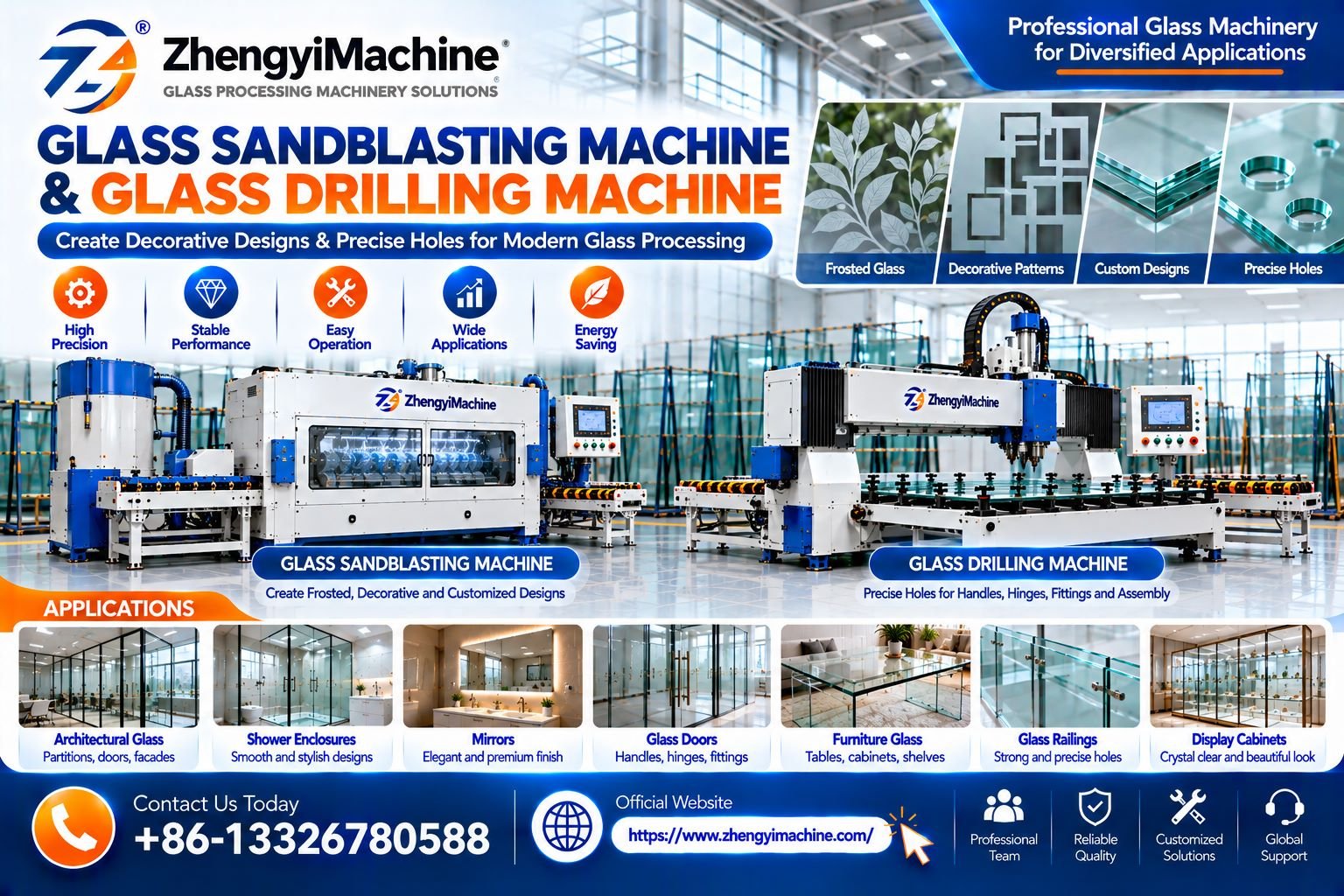
A Glass Sandblasting Machine produces frosted, textured, or decorative effects on suitable glass surfaces through controlled abrasive treatment.
Meanwhile, a Glass Drilling Machine creates accurately positioned holes used for compatible fittings, mounting hardware, and selected architectural applications.
For equipment buyers, the important question is whether machinery can achieve the required production results under appropriate operating conditions.
This creates a stronger focus on equipment demonstrations, sample testing, and clearly documented acceptance criteria.
Why Machinery Testing Matters Before Purchasing
Industrial glass manufacturers often invest in equipment intended to support specific product categories.
However, two machines with similar advertised capabilities may perform differently when processing particular glass dimensions, thicknesses, or finishes.
A structured equipment trial allows buyers to assess relevant performance characteristics before making purchasing decisions.
Important evaluation areas include:
- Processing accuracy: Checking whether machinery meets required dimensions and tolerances.
- Surface consistency: Evaluating decorative finishing quality across suitable sample panels.
- Material compatibility: Confirming supported glass thicknesses and types.
- Operating stability: Assessing machine behaviour under approved processing conditions.
- Technical documentation: Reviewing specifications, instructions, and maintenance requirements.
An important manufacturing principle explains:
Equipment testing helps manufacturers establish realistic expectations about performance.
Glass Sandblasting Machine Trials Reveal Finishing Capabilities
A Glass Sandblasting Machine modifies suitable glass surfaces through abrasive processing.
Depending on the equipment configuration, manufacturers may create frosted finishes, textured patterns, or decorative surface treatments.
Before purchasing equipment, buyers should evaluate whether the machine can produce the desired appearance consistently.
Sample testing may examine surface uniformity, pattern definition, and the suitability of approved abrasive materials.
For example, a manufacturer producing decorative office partitions may require consistent frosted patterns across multiple glass panels.
An equipment demonstration can help assess whether the proposed machine supports these requirements.
However, sample appearance alone does not establish structural suitability.
Manufacturers must also evaluate the effects of abrasive treatment on the intended glass product and its applicable safety requirements.
Glass Drilling Machine Testing Focuses on Dimensional Accuracy
A Glass Drilling Machine creates holes in compatible glass panels using suitable drilling tools and controlled processing arrangements.
Accurate hole positioning is important when glass products require mechanical fittings or specialized installation hardware.
During equipment evaluation, buyers may assess several characteristics.
Hole Positioning
The finished opening should match the required location according to approved fabrication drawings.
Hole Dimensions
The drilling equipment should achieve suitable diameters within the applicable specifications.
Edge Condition
Inspection should identify unacceptable chips, cracks, or other processing defects around the opening.
Processing Stability
Suitable glass support, tooling, and cooling arrangements help maintain controlled drilling conditions.
A useful engineering observation states:
Equipment trials should reflect the buyer’s actual production applications.
Sample Approval Helps Establish Clear Expectations
Sample approval is an important step in machinery evaluation.
A manufacturer may provide representative glass panels and request processing according to clearly defined specifications.
The finished samples can then be inspected against agreed acceptance criteria.
For sandblasting, these criteria may include decorative pattern placement, surface consistency, and visible finish characteristics.
For drilling, they may address hole positions, dimensions, and acceptable edge conditions.
However, a successful individual sample does not guarantee identical results under every production condition.
Buyers should discuss repeatability, material variation, and appropriate machine limitations with the supplier.
Comparing Machines Beyond Initial Purchase Price
Equipment cost remains an important consideration, but the purchase price does not reflect every operational requirement.
Manufacturers should also evaluate tooling, utilities, maintenance, training, and technical support.
A lower-priced glass machine may not provide the necessary processing flexibility for a specialized product range.
Conversely, equipment with advanced capabilities may offer limited value when those functions are unnecessary.
A practical purchasing assessment should consider:
- Required glass-processing applications.
- Supported material specifications.
- Verified production quality.
- Safety and operating requirements.
- Maintenance and spare-parts support.
This approach helps buyers compare machinery according to practical manufacturing needs.
Factory Acceptance Testing Supports Better Procurement Decisions
Factory acceptance testing involves evaluating equipment against agreed requirements before formal acceptance.
The scope depends on the machinery, purchasing agreement, and technical specifications.
For glass-processing equipment, appropriate tests may include operating demonstrations, dimensional verification, protective-device checks, and processing sample inspections.
Buyers should establish clear acceptance criteria before testing begins.
Relevant documentation may include equipment specifications, inspection findings, approved operating instructions, and identified corrective actions.
Factory acceptance testing does not replace installation verification or applicable regulatory requirements.
However, it can provide useful evidence that machinery meets selected purchasing specifications.
Operator Training Influences Equipment Performance
Machinery performance depends partly on how effectively employees understand approved operating procedures.
Manufacturers should evaluate training arrangements when purchasing sandblasting or drilling equipment.
Operators may require instruction on material positioning, approved processing parameters, routine inspections, and emergency controls.
For sandblasting operations, training should address suitable abrasive handling and dust-control requirements.
For drilling equipment, employees should understand tooling compatibility, glass support, and applicable cooling procedures.
Technical repairs should remain the responsibility of qualified personnel.
Appropriate training supports more consistent processing and responsible equipment operation.
Safety Documentation Is Essential for Machinery Buyers
Industrial glass processing presents hazards involving moving components, sharp materials, abrasive particles, and potentially heavy panels.
Equipment buyers should review available safety documentation and protective features.
A sandblasting installation requires appropriate containment and exposure-control arrangements.
Glass drilling equipment needs suitable guarding, stable material support, and approved operating procedures.
Manufacturers must also consider workplace ventilation, waste handling, and applicable occupational safety regulations.
A responsible procurement decision should address these requirements before machinery enters production.
Industry Outlook: Verified Capability Supports Better Manufacturing Decisions
Industrial glass manufacturers benefit from purchasing equipment according to demonstrated processing performance.
Sample trials, technical documentation, operator training, and suitable maintenance arrangements provide a practical foundation for evaluating machinery.
Sandblasting equipment supports selected decorative applications, while drilling machines enable precise openings for compatible installations.
By connecting machinery selection with actual production requirements, businesses can make more informed investments and establish clearer quality expectations.
Frequently Asked Questions (FAQs)
1. What is a glass machine used for?
A glass machine performs specialized manufacturing operations such as cutting, drilling, grinding, polishing, washing, or decorative surface treatment, depending on its configuration.
2. What should buyers test in a Glass Sandblasting Machine?
Buyers should evaluate suitable glass compatibility, surface uniformity, decorative pattern accuracy, approved abrasive requirements, and relevant safety features.
3. How can buyers evaluate a Glass Drilling Machine?
A Glass Drilling Machine can be evaluated through sample drilling, hole-position measurement, dimensional verification, edge inspection, and assessment of approved operating conditions.
4. What is factory acceptance testing for glass machinery?
Factory acceptance testing evaluates selected machine functions and performance characteristics against agreed purchasing specifications before formal equipment acceptance.
5. Why is technical support important when purchasing glass-processing equipment?
Technical support helps manufacturers understand equipment operation, maintenance requirements, compatible replacement components, and appropriate procedures for addressing machinery problems.
Media Contact
Department: Sales, Product Information & Media Enquiries
Industry: Industrial Glass Machinery, Sandblasting & Drilling Equipment
Contact: +86-13326780588
Email: zhengyi@zhengyi.cc
Official Website: https://www.zhengyimachine.com/