Electric vehicle charging stations require carefully engineered housings that protect internal electronics while supporting ventilation, maintenance access, and outdoor installation requirements.
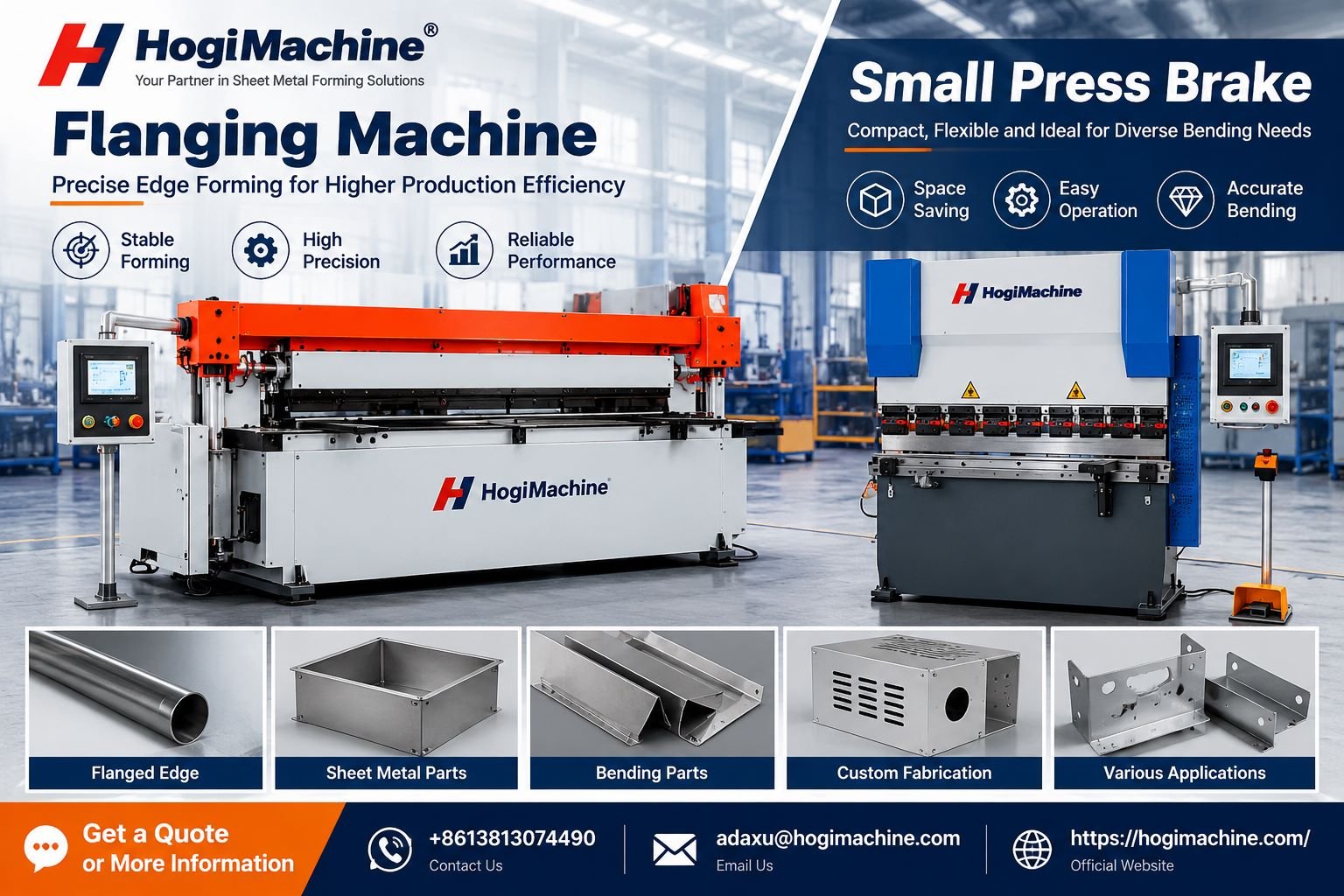
A Flanging machine can assist in producing specialised metal edges and connection profiles for suitable enclosure components.
Meanwhile, a small press brake provides controlled sheet metal bending capabilities for manufacturing panels, mounting brackets, equipment covers, and supporting structures.
These technologies serve different manufacturing functions but can contribute to reliable electrical equipment fabrication.
For sheet metal manufacturers, charging equipment suppliers, and industrial engineering companies, the challenge is producing enclosures that combine dimensional precision, environmental protection, and practical assembly.
Why EV Charging Equipment Requires Precision Fabrication
Electric vehicle charging equipment contains electronic assemblies, electrical connections, monitoring components, and protective systems.
These elements require appropriate mechanical protection.
Outdoor installations may experience rain, dust, temperature variations, and physical impacts.
Poorly fabricated enclosures can create difficulties involving panel alignment, cable access, and sealing arrangements.
Accurate metal forming helps manufacturers produce components that match approved engineering designs.
However, the finished enclosure must also satisfy applicable electrical, environmental, and safety requirements.
What Is a Flanging Machine?
A Flanging machine is industrial equipment used to form specified edge profiles on compatible metal workpieces.
Depending on the machine configuration, it may process circular, cylindrical, or other suitable component geometries.
Flanging operations can create edges required for joining, reinforcement, or subsequent assembly.
In electrical equipment fabrication, specialised flange features may be incorporated into compatible enclosure parts and associated mechanical assemblies.
However, not every flanging machine can manufacture every enclosure geometry.
Businesses should verify machine construction, material capacity, available tooling, and the intended flange profile before selecting equipment.
Understanding the Role of a Small Press Brake
A small press brake bends sheet metal into specified angles using appropriate punches and dies.
It can support the production of compact electrical cabinet components, brackets, mounting plates, and protective panels.
For EV charging equipment manufacturers, accurately bent sheet metal can help create the required enclosure geometry.
Compact press brakes may also be useful for producing customised components in smaller quantities.
However, bending capacity depends on material thickness, working length, forming force, and tooling.
Manufacturers should evaluate these specifications against their actual production requirements.
How Metal Forming Supports Environmental Protection
Outdoor electrical equipment must protect sensitive internal components from environmental exposure.
Appropriately designed folded edges and flange profiles may support mounting, joining, and sealing arrangements.
For example, an enclosure door may incorporate formed features that accommodate a suitable gasket.
However, accurate forming alone does not establish environmental protection.
The complete assembly must consider seals, fasteners, cable entries, ventilation features, and material compatibility.
Where an ingress protection rating is required, the complete enclosure should undergo appropriate evaluation against the applicable standard.
Comparing Forming Equipment for Charging Enclosures
| Manufacturing Requirement | Flanging Machine | Small Press Brake |
| Main Operation | Specialised edge forming | Controlled sheet metal bending |
| Typical Application | Compatible formed edges and joining profiles | Panels, brackets, covers |
| Tooling Requirement | Application-specific forming tools | Punch and die combinations |
| Quality Priority | Flange shape and consistency | Bend accuracy and positioning |
| Material Consideration | Edge deformation | Bend radius and springback |
| Assembly Contribution | Suitable joining features | Accurate enclosure geometry |
Both machines contribute to metal fabrication, but their capabilities are not interchangeable.
Selecting Suitable Materials for Outdoor Equipment
EV charging equipment housings may use painted steel, stainless steel, aluminium, or other engineered materials.
Material selection depends on corrosion resistance, structural requirements, weight, and installation conditions.
Outdoor environments can expose components to moisture and contaminants.
Manufacturers must therefore consider protective coatings and appropriate finishing procedures.
Metal forming may also affect surface treatments.
Excessive deformation or unsuitable tooling can damage certain protective coatings.
Fabrication teams should follow approved material specifications and inspect finished surfaces before assembly.
Why Thermal Management Influences Enclosure Design
Electrical equipment generates heat during operation.
Depending on the charging system, enclosures may require ventilation, heat transfer features, or other thermal management arrangements.
Metal panels and internal mounting structures can influence airflow and component positioning.
Incorrectly located bends or brackets may obstruct intended ventilation paths.
For this reason, sheet metal design should be coordinated with electrical and thermal engineering requirements.
A mechanically accurate housing may still require design changes if its thermal performance is unsuitable.
Representative equipment testing is essential before commercial deployment.
Designing for Installation and Maintenance
Charging equipment must also be practical to install, inspect, and service.
Mounting brackets, access doors, removable covers, and internal support features should be positioned carefully.
A compact press brake can manufacture suitable bent components for these applications.
Specialised edge-forming equipment may support particular joining features.
However, maintenance accessibility must be planned during product design.
Technicians should be able to reach designated service components through appropriate procedures without compromising required safeguards.
Managing Dimensional Accuracy During Assembly
Enclosure production often involves multiple fabricated parts.
A small dimensional error in one component can affect the alignment of several adjoining panels.
Manufacturers should identify critical mounting positions, sealing interfaces, and connection features before production.
Inspection may include bend angles, panel dimensions, flange profiles, and hole positions.
Prototype assembly helps verify whether components fit as intended.
Documented acceptance criteria can support consistent production quality.
Quality Control for Electrical Equipment Housings
Metal fabrication inspection should address both component quality and finished assembly requirements.
Important checks may include:
- Dimensional accuracy and panel alignment.
- Flange and bend consistency.
- Surface finish and coating integrity.
- Fastener and mounting compatibility.
- Sealing interface geometry.
- Access for assembly and maintenance.
Electrical safety, grounding, thermal performance, and environmental protection require additional evaluation of the complete equipment.
Choosing Suitable Metal Forming Machinery
Manufacturers evaluating forming equipment should consider material compatibility, working capacity, tooling flexibility, dimensional repeatability, and safety features.
The selected machinery should accommodate actual component geometry and expected production volumes.
Supplier documentation, spare-part availability, and technical assistance are also important.
Testing representative enclosure components can help confirm practical suitability before purchasing equipment.
Frequently Asked Questions (FAQs)
1. What is a Flanging machine?
A flanging machine forms compatible metal workpiece edges into specified profiles for joining, reinforcement, and specialised manufacturing applications.
2. What is a small press brake used for?
A small press brake bends suitable sheet metal into defined angles for manufacturing brackets, panels, covers, and other fabricated components.
3. Can press brakes manufacture EV charging enclosure components?
Yes. Suitable press brakes can produce accurately bent panels, mounting brackets, and structural features within their rated capacities.
4. Which metals are suitable for EV charging equipment housings?
Painted steel, stainless steel, and aluminium may be used, depending on environmental, mechanical, and electrical design requirements.
5. How can manufacturers improve charging enclosure quality?
Manufacturers should use suitable materials, accurate forming equipment, approved drawings, representative assembly testing, and appropriate environmental and electrical verification.
Media Contact
Department: Industrial Sheet Metal Forming and Machinery Enquiries
Phone: +86 138 1307 4490
Email: daxu@hogimachine.com
Official Website: https://hogimachine.com/