As consumer brands explore convenient, lightweight, and functional packaging solutions, flexible packaging formats are gaining attention across food, beverage, personal care, and household product applications.
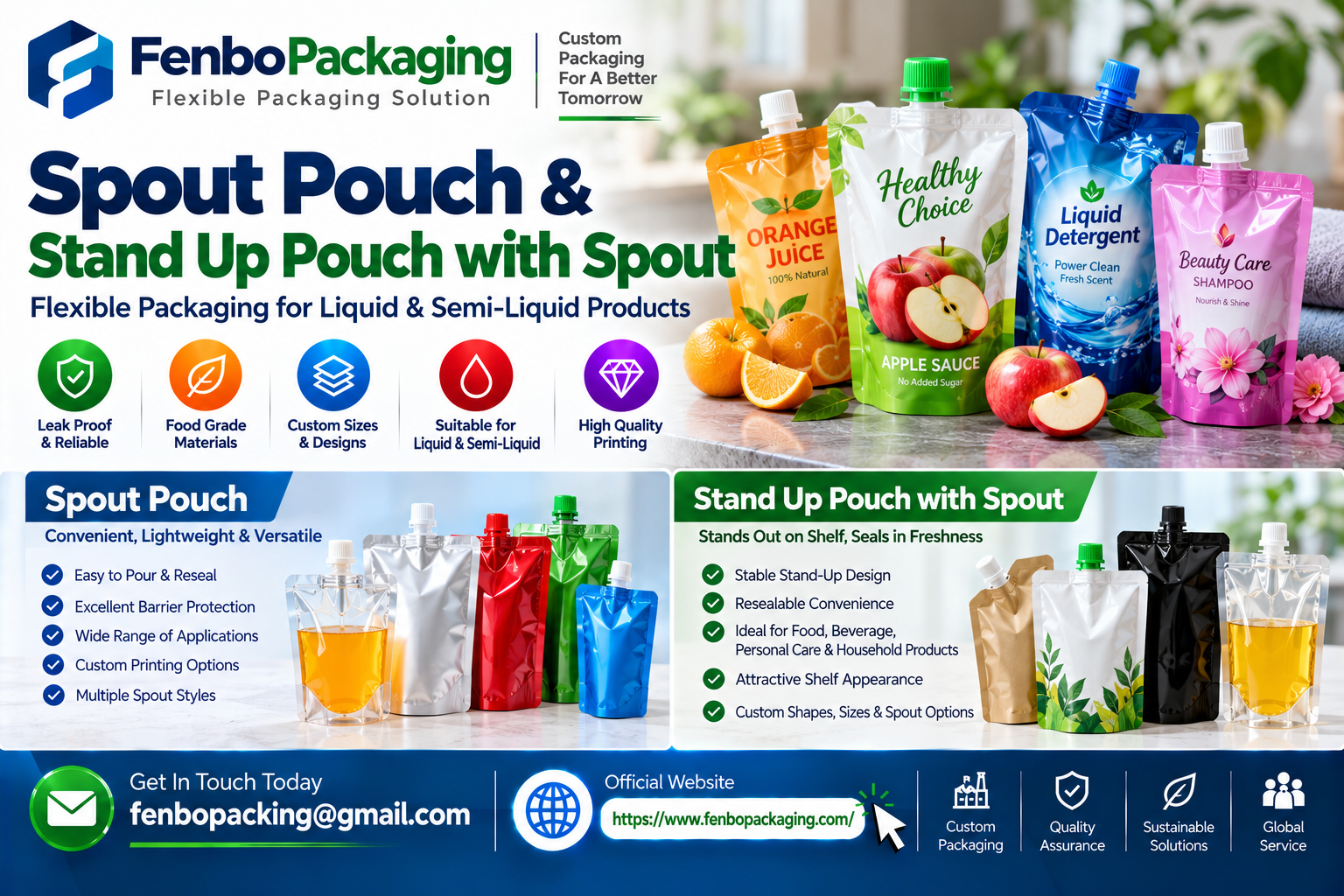
Among these options, the Spout Pouch offers a practical combination of flexible packaging and controlled product dispensing. Designed with a fitted spout and suitable closure, this packaging format can help consumers pour, dispense, and store compatible liquid or semi-liquid products.
The stand up pouch with spout has also become an attractive packaging option for businesses seeking customizable designs, convenient shelf presentation, and alternatives to traditional rigid containers.
Understanding material structures, filling requirements, sealing performance, and product compatibility is essential when selecting the right packaging solution.
What Is a Spout Pouch?
A Spout Pouch is a flexible packaging container equipped with a dispensing spout, typically combined with a screw cap or another compatible closure.
The pouch is manufactured using suitable flexible films or laminated materials selected according to the product being packaged.
Its spout allows consumers to dispense the contents without fully opening the pouch.
Common applications include:
- Fruit juices and liquid beverages.
- Sauces and food preparations.
- Baby food and fruit purées.
- Liquid soaps and hand washes.
- Shampoos and personal care products.
- Detergents and household liquids.
- Selected industrial liquid products.
Actual packaging suitability depends on product properties, material compatibility, and applicable safety requirements.
Why Choose a Stand Up Pouch with Spout?
A stand up pouch with spout combines a flexible pouch structure with a bottom gusset designed to support upright positioning when appropriately filled.
Unlike certain flat pouches, the standing design can improve product presentation on suitable retail shelves.
The integrated spout offers an additional convenience feature, particularly for products that consumers dispense repeatedly.
Convenient Product Dispensing
The spout supports controlled pouring or dispensing, depending on the product’s consistency and the spout design.
Resealable Packaging
A compatible cap may allow consumers to close the package after opening.
Attractive Brand Presentation
The pouch surface can accommodate printed graphics, product details, instructions, and branding.
Flexible Packaging Sizes
Manufacturers may offer different capacities, dimensions, spout positions, and closure options.
Storage Efficiency
Flexible packaging can occupy less space before filling than some rigid packaging alternatives.
These advantages should be evaluated alongside filling compatibility, distribution requirements, and overall packaging costs.
Key Components of Spout Pouch Packaging
A functional package requires appropriate integration of several components.
Flexible Film Structure: Provides the main package body and supports required barrier and mechanical properties.
Spout Fitting: Creates an opening designed for dispensing the product.
Closure System: Helps close the dispensing opening and may provide tamper-evidence features.
Bottom Gusset: Supports upright positioning in stand-up designs.
Sealed Edges: Help maintain package integrity during filling, transportation, and storage.
Industries Using Spout Pouch Packaging
Different industries require different material specifications and packaging designs.
| Industry | Typical Products | Important Considerations |
| Food and Beverage | Juices, sauces, purées | Food-contact suitability and barrier performance |
| Personal Care | Shampoo, liquid soap | Formulation compatibility and dispensing |
| Household Cleaning | Detergents, cleaning liquids | Chemical resistance and sealing |
| Health and Nutrition | Selected liquid preparations | Hygiene and applicable regulatory requirements |
| Industrial Products | Compatible specialty liquids | Material resistance and safe handling |
Each product category should undergo appropriate packaging compatibility assessment.
Spout Pouches vs Traditional Plastic Bottles
Businesses often compare flexible and rigid packaging when developing new products.
| Comparison Factor | Spout Pouches | Plastic Bottles |
| Structure | Flexible films and spout | Rigid or semi-rigid body |
| Dispensing | Integrated spout | Bottle opening or dispenser |
| Empty packaging storage | Can be compact | Retains its basic shape |
| Shelf presentation | Depends on gusset and fill | Usually stands independently |
| Customization | Printing, size, closures | Shape, labeling, closures |
| Recyclability | Depends on film and fitting | Depends on resin and local systems |
Neither format is automatically superior. The best choice depends on the product, filling equipment, distribution conditions, and environmental considerations.
How Spout Pouches Are Manufactured
A typical Spout Pouch production program includes several important stages.
Material Selection
The manufacturer chooses suitable flexible films or laminates based on the required product protection and performance.
Printing and Lamination
Where required, packaging graphics are printed and film layers are combined using appropriate manufacturing processes.
Pouch Formation
The flexible material is converted into the required pouch shape, including gussets and sealed edges.
Spout Integration
A compatible dispensing fitting is attached using the appropriate sealing process.
Quality Inspection
Finished pouches may be checked for dimensions, seal integrity, appearance, and closure functionality.
The exact production sequence depends on the pouch structure and manufacturing equipment.
Important Quality Tests for Spout Pouches
Packaging failures can lead to leaks, damaged products, or distribution problems.
Businesses should discuss appropriate testing methods with their packaging suppliers.
Common evaluations may include:
- Seal strength testing.
- Leak and pressure testing.
- Spout attachment integrity.
- Cap fit and closure performance.
- Dimensional inspection.
- Film barrier testing.
- Product compatibility assessment.
For food applications, material compliance and suitable hygiene controls must also be considered.
How to Select the Right Stand Up Pouch with Spout
Before placing a manufacturing order, businesses should define their packaging requirements.
- Product Characteristics: Identify viscosity, acidity, ingredients, and other relevant properties.
- Pouch Capacity: Choose a suitable filling volume and headspace.
- Spout Design: Select a dispensing opening appropriate for the product.
- Closure Requirements: Determine resealing and tamper-evidence needs.
- Filling Conditions: Confirm compatibility with filling temperature and equipment.
- Barrier Performance: Establish protection requirements for moisture, oxygen, and light.
- Branding: Prepare artwork and labeling specifications.
- Order Quantity: Discuss tooling, minimum quantities, and production schedules.
Product testing is particularly important for hot-fill applications, aseptic packaging, or products requiring extended shelf life.
Sustainability Considerations in Flexible Packaging
Flexible packaging may offer opportunities to reduce package weight and transportation space.
However, environmental performance depends on the complete material structure, product protection, production methods, and disposal arrangements.
Multilayer laminates and mixed-material spout fittings can present recycling challenges.
Businesses should evaluate available mono-material options where technically appropriate and confirm compatibility with local recycling systems before making sustainability claims.
Frequently Asked Questions (FAQs)
1. What is a Spout Pouch?
A spout pouch is a flexible packaging container with an integrated dispensing opening and compatible closure.
2. What is a stand up pouch with spout?
It is a flexible pouch with a bottom gusset that supports upright positioning and an attached spout for dispensing.
3. Which products can be packed in spout pouches?
Common examples include juices, sauces, shampoos, detergents, purées, and other compatible liquids.
4. Are spout pouches suitable for food products?
Yes, provided the materials, manufacturing controls, and packaging design meet applicable food-contact and product requirements.
5. Can spout pouches be customized?
Yes. Manufacturers may offer different sizes, printing options, material structures, spout positions, and closures.
6. Are spout pouches leak-resistant?
Properly manufactured and tested pouches can provide reliable seals, but performance depends on materials, construction, and handling.
7. Can spout pouches be reused?
Some packages can be resealed, but reuse and refilling should only occur when the product and package are specifically designed for it.
8. What affects the cost of spout pouch packaging?
Material selection, pouch size, printing, spout design, order quantity, and quality requirements influence manufacturing costs.
9. Are stand-up spout pouches recyclable?
Recyclability depends on the material structure, spout components, and available local recycling facilities.
10. How can businesses choose a spout pouch manufacturer?
Evaluate material options, technical capabilities, quality inspection methods, product compatibility, minimum order quantities, and manufacturing experience.
Media Contact
Industry: Flexible Packaging Manufacturing & Customized Packaging Solutions
Service Enquiries: Spout Pouches, Stand-Up Pouches with Spouts, Custom Printed Packaging & Flexible Packaging Materials
Email: fenbopacking@gmail.com
Official Website: https://www.fenbopackaging.com/