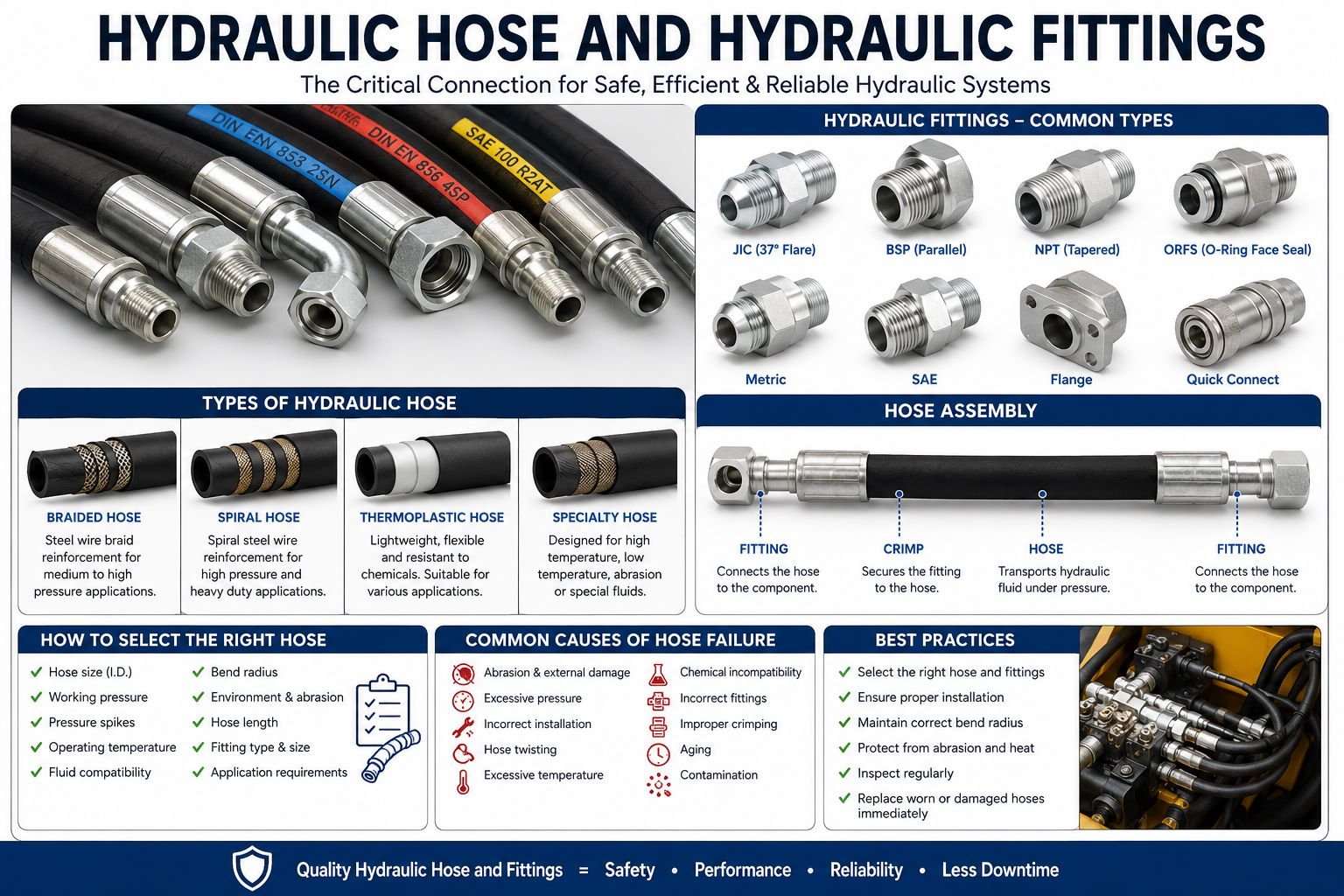
A Hydraulic Hose is one of the most important components in fluid-power equipment. It carries pressurised hydraulic fluid between pumps, valves, cylinders, motors and other components, allowing machinery to transfer power and perform controlled movements.
Although a hose may appear to be a relatively simple component, selecting the wrong specification can affect equipment reliability, maintenance requirements and operator safety. Pressure rating, hose diameter, fluid compatibility, temperature, bend radius, reinforcement and fittings all need to be considered.
The selection process becomes even more critical for demanding applications such as a drilling hose, where equipment may operate under challenging pressure, movement, vibration and environmental conditions.
What Is a Hydraulic Hose?
A Hydraulic Hose is a flexible reinforced tube designed to transport hydraulic fluids under pressure. Unlike rigid piping, flexible hoses can accommodate equipment movement, vibration and installations where fixed pipework would be impractical.
A typical hydraulic hose consists of three main layers:
· Inner tube: Carries the hydraulic fluid and must be compatible with the fluid being used.
· Reinforcement: Provides strength and pressure resistance. Depending on the application, reinforcement may include textile braid, steel wire braid or spiral wire.
· Outer cover: Protects the reinforcement from abrasion, weather exposure and other external conditions.
These layers work together as an engineered assembly. Therefore, choosing a hose solely on its outside diameter or appearance is not sufficient.
Where Are Hydraulic Hoses Used?
Hydraulic hoses are found wherever hydraulic power needs to be transmitted through flexible connections. Common applications include construction machinery, industrial equipment, material handling systems, agricultural machines and specialised drilling equipment.
Typical applications include:
· Excavators and loaders
· Hydraulic presses
· Cranes and lifting equipment
· Mining machinery
· Agricultural equipment
· Manufacturing machinery
· Mobile hydraulic systems
· Drilling and exploration equipment
· Material-handling machinery
· Industrial power units
For example, an excavator depends on hydraulic circuits to operate its boom, arm and bucket. These circuits require correctly specified hoses and fittings capable of handling the operating conditions of the machine.
Hydraulic Hose vs Drilling Hose: What Is the Difference?
While both products are designed to convey fluid, a drilling hose is generally intended for specialised drilling-related service and must be selected according to the pressure, media, movement, temperature and applicable equipment requirements.
| Factor | Hydraulic Hose | Drilling Hose |
| Main purpose | Hydraulic power transmission | Fluid transfer in drilling applications |
| Typical environment | Industrial and mobile machinery | Drilling and oilfield operations |
| Flexibility | Application dependent | Often important due to equipment movement |
| Pressure requirements | Vary by hydraulic system | Determined by drilling service and system |
| Construction | Textile, wire braid or spiral reinforcement | Application-specific reinforced construction |
| Selection priority | Pressure, fluid, size and temperature | Pressure, media, movement and drilling conditions |
A drilling hose should therefore not be treated as simply a larger standard hydraulic hose. The actual application and equipment specifications must determine the appropriate construction.
How to Select the Right Hydraulic Hose
A useful way to approach hose selection is to evaluate size, temperature, application, media, pressure, ends and delivery requirements. Engineers and maintenance teams should also consider external conditions and equipment movement.
1. Determine the Required Working Pressure
Start with the maximum operating pressure of the hydraulic system.
The selected hose must have a working-pressure rating appropriate for the intended system. Pressure spikes and dynamic operating conditions should also be considered according to the hose manufacturer’s technical guidance and applicable standards.
Never choose a hose because it physically fits the equipment while ignoring its pressure specification.
2. Select the Correct Internal Diameter
The inside diameter influences fluid velocity and pressure loss.
A hose that is too small can create excessive flow resistance, while unnecessarily oversized hoses can increase cost, weight and installation space.
Flow requirements, hose length and the hydraulic circuit design should therefore be considered when determining the correct size.
3. Check Temperature Requirements
Both fluid temperature and ambient temperature matter.
Hydraulic systems installed near engines, furnaces or other heat-producing equipment may expose hoses to elevated external temperatures. Conversely, outdoor machinery may need to operate reliably in low-temperature environments.
Always check the manufacturer’s specified temperature range for the selected hose and fluid combination.
4. Confirm Fluid Compatibility
The inner tube must be compatible with the media passing through it.
Hydraulic systems may use mineral oils, synthetic fluids, water-based fluids or other specialised media. Compatibility should be verified rather than assumed.
For a drilling hose, identifying the exact media and operating conditions is especially important before specifying the product.
5. Consider Bend Radius
Every hose has a minimum bend-radius requirement.
Installing a hose in a tighter bend than recommended can place additional stress on the reinforcement and hose assembly. Routing should allow sufficient space for natural movement without excessive bending, stretching or twisting.
6. Evaluate Abrasion and External Conditions
In mobile machinery, hoses may be exposed to dirt, rocks, machine frames and other components.
Consider whether the application involves:
· Continuous rubbing or abrasion
· Oil or chemical exposure
· Outdoor weather
· UV exposure
· Heat sources
· Mechanical movement
· Harsh industrial environments
Where abrasion cannot be eliminated through correct routing, appropriate protective measures may be necessary.
7. Select Compatible Fittings
A reliable hose system is more than the hose itself.
Hose, fittings and assembly procedures must be compatible. Incorrect fitting selection or assembly can compromise the integrity of the entire hose assembly.
For critical equipment, purchasing a properly specified hose assembly from an experienced supplier is preferable to making assumptions based on dimensions alone.
Why Hose Reinforcement Matters
Reinforcement helps a Hydraulic Hose withstand internal pressure while retaining the flexibility required by the application.
Different constructions are available depending on the intended duty.
Textile Reinforcement
Textile-reinforced hoses may be suitable for certain lower-pressure applications where flexibility is important.
Wire-Braided Hose
Steel-wire braided constructions are widely used across industrial and mobile hydraulic systems. The number and type of reinforcement layers depend on the hose specification.
Spiral-Wire Hose
Spiral reinforcement is commonly associated with demanding high-pressure and heavy-duty hydraulic applications.
The correct choice should always be based on the manufacturer’s pressure, temperature and application specifications rather than assuming that more reinforcement automatically makes a hose suitable for every system.
Understanding Drilling Hose Requirements
A drilling hose may be used in demanding drilling operations where fluid transfer, equipment movement and environmental exposure create specialised performance requirements.
Before ordering, buyers should provide accurate application information, including:
· Required hose size
· Working pressure
· Media being conveyed
· Operating temperature
· Required length
· Connection type
· Equipment type
· Installation environment
· Applicable industry or equipment specification
Providing these details allows the supplier to recommend a product based on actual operating conditions instead of selecting a hose by appearance or price alone.
Signs a Hydraulic Hose May Need Attention
Routine inspection can help identify deterioration before it develops into a larger equipment problem.
Common warning signs include visible cracking, abrasion, exposed reinforcement, damaged fittings, unusual deformation, leaks or deterioration near connection points.
A hose that appears damaged should be assessed by appropriately trained personnel. High-pressure hydraulic leaks can present serious hazards, so suspected leaks should not be checked by placing hands near the hose.
Common Hydraulic Hose Selection Mistakes
One of the most frequent mistakes is buying a replacement based only on physical dimensions.
Two hoses with similar dimensions may have very different pressure ratings, temperature capabilities, reinforcement structures and fluid compatibility.
Other mistakes include:
1. Selecting by price alone.
2. Ignoring maximum working pressure.
3. Using incompatible fittings.
4. Exceeding the recommended bend radius.
5. Twisting the hose during installation.
6. Allowing unnecessary abrasion against equipment.
7. Ignoring fluid compatibility.
8. Failing to consider temperature.
9. Reusing components without confirming suitability.
10. Treating specialised drilling hose applications like ordinary hydraulic installations.
A technically suitable hose can often provide better long-term value than repeatedly replacing an incorrectly specified product.
How a Reliable Hydraulic Hose Supplier Adds Value
For commercial buyers, the supplier’s technical capability can be just as important as product availability.
A knowledgeable Hydraulic Hose supplier should be able to discuss application conditions and help buyers identify appropriate hose construction, dimensions, pressure rating and compatible connections.
For industrial procurement teams, contractors and maintenance departments, it is useful to ask potential suppliers about product specifications, technical documentation, available sizes, fittings, assembly capabilities and lead times.
Need help selecting a hydraulic hose? Share your pressure, temperature, fluid, hose size, length and connection requirements with an experienced supplier before placing an order.
Hydraulic Hose Maintenance: Practical Best Practices
Good maintenance begins with regular visual inspection and correct installation.
Hoses should be routed to avoid unnecessary tension, twisting and contact with sharp or abrasive surfaces. Connections should be checked as part of the equipment’s planned maintenance programme.
Replacement decisions should be based on equipment requirements, hose condition, service history and manufacturer guidance rather than waiting for an obvious failure.
For drilling operations, inspections may need additional attention because hose assemblies can be exposed to continuous equipment movement and challenging operating environments.
Questions to Ask Before Requesting a Hydraulic Hose Quote
Providing complete technical information can speed up supplier recommendations and reduce the risk of ordering an unsuitable product.
Before requesting a quotation, confirm:
· What fluid will pass through the hose?
· What is the normal and maximum working pressure?
· What temperatures will the hose experience?
· What internal diameter is required?
· What hose length is needed?
· What fittings and connection sizes are required?
· Will the hose move during operation?
· Is abrasion protection required?
· Is it a general hydraulic or drilling hose application?
· Are specific standards, certifications or equipment specifications required?
These questions are particularly valuable for OEMs, maintenance contractors, industrial plants and drilling companies purchasing replacement or project-specific hose assemblies.
Internal Linking Opportunities
To strengthen topical authority and improve navigation, this article can link naturally to related website pages using anchor text such as industrial hose solutions, hydraulic hose fittings, high-pressure hose, hose assemblies, drilling hose supplier, hydraulic fittings, industrial hose supplier, and hydraulic hose maintenance.
Product-specific sections can also link directly to relevant catalogue or enquiry pages where visitors can check available specifications.
Frequently Asked Questions
What is a Hydraulic Hose used for?
A Hydraulic Hose transfers pressurised hydraulic fluid between components such as pumps, valves, cylinders and motors.
How do I choose the correct hydraulic hose?
Check pressure, temperature, internal diameter, fluid compatibility, bend radius, fittings and environmental conditions before selection.
What is a drilling hose?
A drilling hose is a specialised flexible hose intended for particular drilling-related fluid-transfer applications and operating conditions.
Can any hydraulic hose be used for drilling equipment?
Not necessarily. Hose selection must match the drilling equipment’s pressure, media, temperature, connections and applicable specifications.
What causes hydraulic hoses to fail prematurely?
Possible causes include abrasion, incorrect routing, excessive bending, twisting, incompatible fluids, excessive temperature, unsuitable pressure ratings and improper assembly.
Why is the hose inside diameter important?
The inside diameter affects fluid velocity, flow restriction and pressure loss within the hydraulic circuit.
Can hydraulic hoses handle high temperatures?
Some can, but temperature capability varies by hose construction and fluid. Always check the manufacturer’s specified operating range.
What information should I give a hydraulic hose supplier?
Provide hose size, pressure, temperature, fluid, length, fitting requirements, equipment details and installation conditions.
When should a hydraulic hose be replaced?
Replacement should follow equipment and manufacturer guidance and consider inspection findings, damage, deterioration and service conditions.
Are hydraulic hose fittings interchangeable?
Not automatically. Fitting compatibility depends on hose type, dimensions, connection standard and assembly requirements.